
Aidan Nuttall | Strategic Action in an AI World
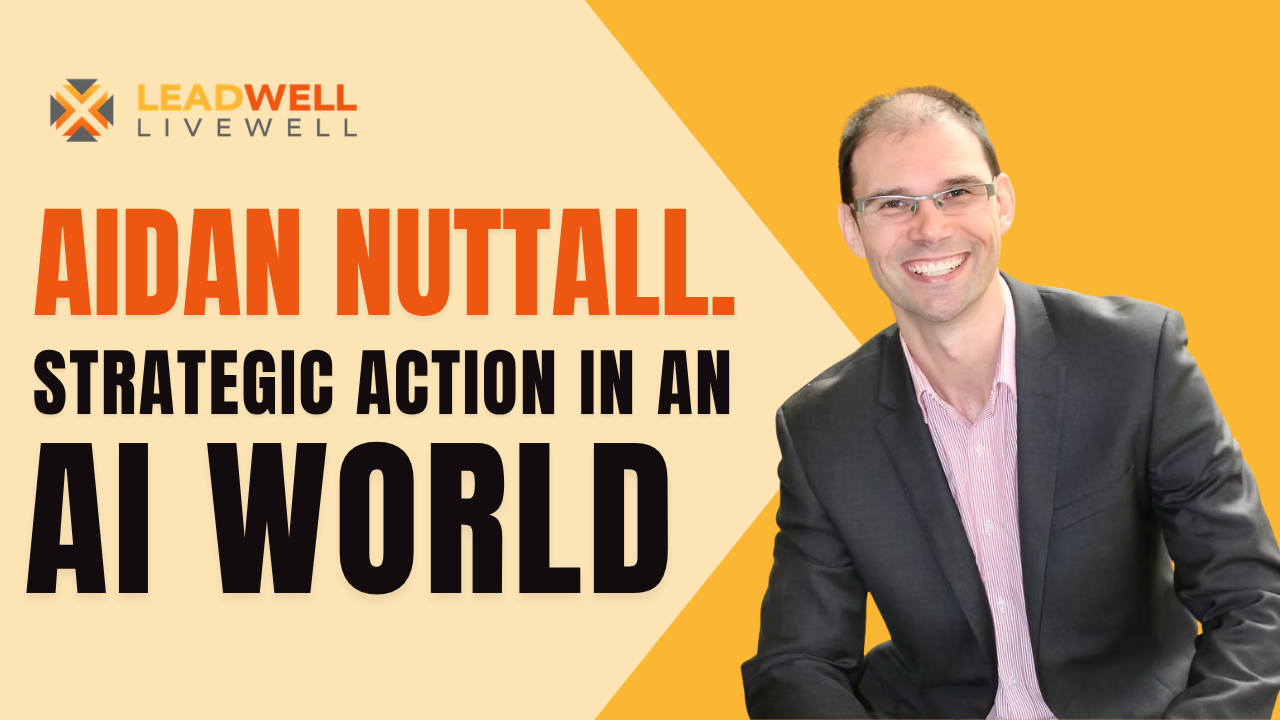
What does strategic planning look like when the world is changing faster than most organisations can respond?
In this episode of Lead Well Live Well, Mark Bilton speaks with Aidan Nuttall, Strategy Facilitator and Strategy Execution Specialist, about strategic action, AI, business agility, and why traditional strategic planning is no longer enough.
As artificial intelligence, technology, customer behaviour, and market conditions continue to shift, leaders need more than a static plan. They need the ability to think strategically, act quickly, learn continuously, and align their teams around what matters most.
Watch the Full Conversation
Why Traditional Strategic Planning Is No Longer Enough
For many organisations, strategic planning has traditionally meant long documents, fixed goals, and multi-year forecasts. But in an AI-driven world, that approach can quickly become outdated.
Aidan explains that strategy must now move beyond planning and into action. Leaders need shorter learning cycles, clearer priorities, and the discipline to review, adapt, and execute as conditions change.
From Strategy to Strategic Action
A plan only becomes useful when it leads to movement.
One of the key themes in this conversation is that organisations often fail not because they lack strategy, but because they do not turn strategy into action. Without action, there is no feedback. Without feedback, there is no learning.
Strategic action helps leaders test ideas, understand what is working, and make better decisions faster.
How AI Is Changing Business Strategy
Artificial intelligence is not just a productivity tool. It is changing how organisations think, work, compete, and create value.
In this conversation, Mark and Aidan explore why leaders cannot afford to ignore AI, and why experimentation is now essential. The goal is not to have every answer immediately. The goal is to start learning, testing, and understanding how AI can support business value.
Why Team Alignment Matters More Than Ever
As uncertainty increases, alignment becomes a leadership advantage.
Aidan discusses the importance of bringing the right people into the room, helping them understand the problem, and creating shared ownership of the direction forward.
When teams help shape the strategy, they are more likely to support it, act on it, and hold each other accountable.
Key Themes in This Episode
• Strategic planning in an AI-driven world
• Strategy execution and strategic action
• Agile thinking for leadership teams
• Scenario planning and uncertainty
• AI, innovation, and business transformation
• Leadership alignment and accountability
• Faster learning cycles and better decision-making
• How organisations can adapt to rapid change
Who This Episode Is For
This episode is for CEOs, founders, business owners, executives, and leadership teams who want to lead with greater clarity in a fast-changing environment.
If your organisation is trying to navigate AI, improve strategic execution, build stronger alignment, or move from planning to action, this conversation will give you practical insight and fresh perspective.
Prefer to Listen?
About Aidan Nuttall
Aidan Nuttall is a Strategy Facilitator and Strategy Execution Specialist who helps organisations move from strategic thinking to strategic action.
With a background in technology, agile delivery, strategy facilitation, and execution, Aidan works with organisations across government, not-for-profit, corporate, and multinational sectors. His work helps leadership teams create alignment, navigate complexity, and turn strategy into meaningful action.
Website: https://www.waterfield.com.au/
LinkedIn: https://www.linkedin.com/in/aidannuttall/
About Lead Well Live Well
Lead Well Live Well helps founders, CEOs, and leadership teams create clarity, growth, wealth, and legacy without losing balance along the way.
Through Stragile® Strategic Mapping, the Lead Well Leadership Program, and My Board Creation Program, Lead Well Live Well supports leaders to clarify strategy, strengthen leadership capability, and build the structure needed for sustainable growth.
