
Kristen Hansen on Neuroscience, Leadership and Performance
One of the easiest traps to fall into as a leader is also one of the most expensive over time.
Someone brings you a problem. You know the answer. You give it to them.
It feels efficient. It feels helpful. In the moment, it probably is.
But if that becomes your default, you can slowly train the people around you to stop thinking for themselves.
I have seen this pattern many times over the years. Capable leaders become the person everyone relies on. Every difficult decision comes back to them. Every problem gets escalated. Every answer sits at the top.
Eventually, the leader becomes the bottleneck.
That was one of the most useful themes in my recent conversation with Kristen Hansen, a leadership neuroscience expert who has worked with tens of thousands of leaders.
If you would like to watch the full conversation, you can do that here:
Kristen made the point very clearly. In today’s working environment, leadership is less about getting people to do more, faster, and more about helping people think well.
That is a very different job.
One of the frameworks Kristen uses to explain leadership performance is built around five areas: Think, Regulate, Engage, Adapt and Develop.
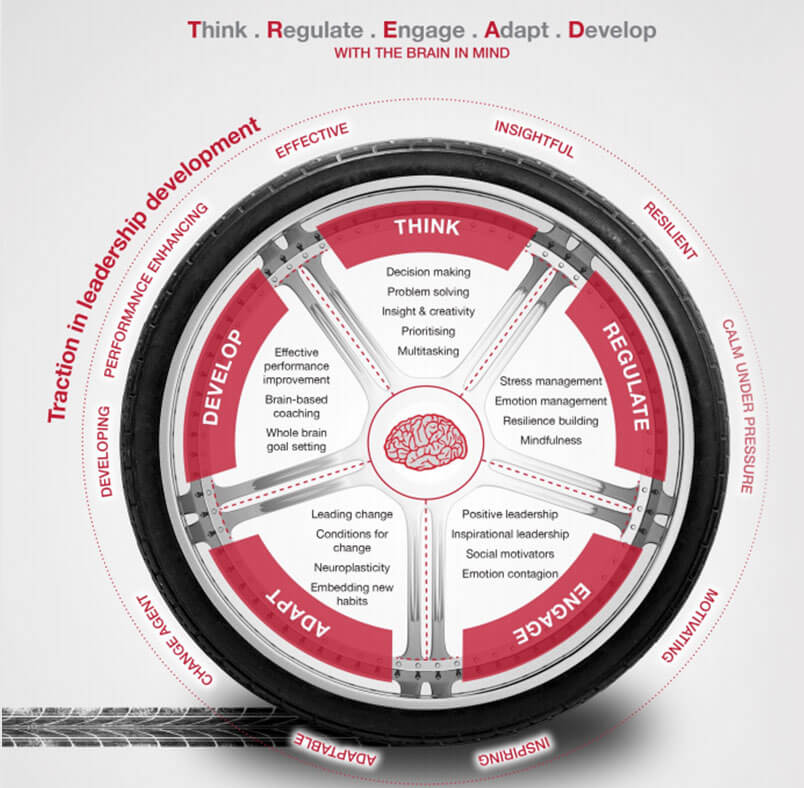
The framework is useful because it brings together what can otherwise feel like separate leadership challenges...
The Leadership Environment Has Changed
Traditional management was built for a more predictable world.
You could define the process, tell people what to do, measure compliance and drive output.
That approach becomes much less effective when people are dealing with complexity, AI, rapid change, uncertainty and situations that cannot be solved by simply following a procedure.
People have to make judgement calls.
They have to interpret information.
They have to adapt.
They have to think on their feet.
Kristen described this shift well when she said that we now need to create thinkers, not simply doers.
I think that is one of the most important leadership challenges in business today.
If your people have to come back to you for every answer, you do not really have a capable team. You have a dependency system.
The Leader’s Job Is to Build Better Thinking
This changes the role of the leader.
Instead of asking, “How quickly can I solve this for them?”, a better question is:
“How do I help this person think their way through it?”
That may mean asking:
“What do you think is really going on here?”
“What options have you considered?”
“What would you recommend?”
“What could go wrong?”
“What outcome are we actually trying to achieve?”
The point is not to make people struggle unnecessarily.
The point is to develop judgement.
Because every time a leader provides the answer too quickly, there is a chance the other person misses the opportunity to build capability.
Good leadership is not measured by how many problems you personally solve.
It is measured, in part, by how many people around you become better at solving problems themselves.
Your Emotional State Is Part of Your Leadership
Another idea from the conversation that I think leaders should take seriously is Kristen’s line:
“People don’t feel our strategy. They feel our state.”
That is worth thinking about.
Most leaders spend a great deal of time thinking about strategy, structure, targets and communication.
But teams also respond to the emotional state of the person leading them.
If the leader is anxious, impatient or reactive, that state affects the room.
When pressure rises, thinking tends to narrow. People become more cautious. Creativity drops. Decisions become more reactive.
And if the leader is in that state, it can quickly spread across the team.
This is why self-management is not just a wellbeing issue.
It is an operational issue.
Before a difficult meeting or major decision, I think leaders should ask:
“What state am I in, and what state am I about to create in everyone else?”
Do Not Confuse Urgency With Good Decision-Making

Pressure creates a powerful illusion.
It tells you that because something feels urgent, you must react immediately.
That is often where poor decisions begin.
Kristen talked about recognising whether you are operating from a state of performance or survival.
That distinction matters.
When you are frustrated, angry, threatened or overwhelmed, your first response is not always your best response.
A short pause can be more valuable than another ten minutes of frantic thinking.
Kristen described a simple circuit breaker: breathe, identify the emotion, and then reappraise the situation.
One of the questions she uses is:
“How can I look at this differently?”
I like that because it does not deny the problem.
It creates enough space to see more than the problem.
You might ask:
“What can we learn here?”
“What have we not considered?”
“What opportunity is hidden in this?”
“What decision would I make if I were not reacting emotionally?”
In leadership, the quality of the pause often affects the quality of the decision.
Lead the Outcome, Not Every Step
We also discussed the difference between process-driven leadership and outcome-driven leadership.
I am not anti-process.
Processes matter.
They create consistency, reduce unnecessary variation and help people understand expectations.
But processes should support thinking, not replace it.
In a complex environment, no process can anticipate every situation.
At some point, someone has to exercise judgement.
That is why I prefer to be very clear about the outcome, the boundaries and the accountability, then give capable people room to determine how they will get there.
That creates a much healthier leadership dynamic.
You can still hold people accountable.
You can still set standards.
You can still measure performance.
But you are not controlling every move.
You are developing ownership.
Compliance Is Not Commitment
There is a major difference between someone doing something because they were told to and someone genuinely owning the result.
Kristen described that shift as moving from compliance to commitment.
I think many organisations underestimate how significant that difference is.
You can tell a team:
“We need to increase revenue by 15 per cent.”
That is clear.
But clarity alone does not create commitment.
You can also ask:
“What would success look like?”
“What would we be celebrating if we got this right?”
“Why does this matter?”
“What does achieving this make possible?”
Those questions bring people into the outcome.
And when people have some ownership of the destination, their relationship with the work changes.
They are no longer just executing instructions.
They are contributing to something they understand.
Busy Leaders Often Remove the Space They Need Most
Another part of the conversation that resonated with me was the discussion around white space.
Where do your best ideas come from?
Probably not while you are answering emails.
Often they arrive in the shower, on a walk, during exercise, on a flight, or when your mind is not actively forcing an answer.
Yet modern leaders fill almost every spare moment.
We listen to something while walking.
We check the phone between meetings.
We answer messages during lunch.
We fill the commute.
We remove the very space where strategic thinking can happen.
Kristen’s point was simple: the brain needs periods where it is not constantly occupied.
I have found the same thing in practice.
Sometimes the answer to a difficult problem does not arrive by pushing harder.
Sometimes you need to leave the desk.
Walk.
Think.
Let the problem sit for a while.
Then come back to it.
Working More Is Not the Same as Leading Better
Over the years, I have worked in businesses where there was always more work available than anyone could possibly complete.
You could work twelve hours a day and still find another twelve hours of work waiting for you.
That is why I have never believed that the answer to leadership pressure is simply more hours.
If you continually deplete yourself, eventually that depletion appears in your judgement, your patience, your relationships and your decisions.
And your team pays for it too.
There is a difference between working hard and operating permanently in exhaustion.
Leaders need enough capacity to think clearly, listen properly and make good decisions.
That requires energy, not just effort.
Coaching Means Resisting the Urge to Answer
Kristen shared a useful story from her early management career.
She thought she was coaching her team.
Then she realised she was actually training, mentoring, supporting and telling.
Coaching was different.
It meant asking questions that helped people create their own insight and their own solution.
That distinction is important.
Many leaders think they are developing people when they are actually giving better instructions.
Those are not the same thing.
One creates compliance.
The other builds capability.
A useful test is this:
When someone comes to you with a problem, do they also bring a recommendation?
If the answer is rarely yes, there may be too much answering and not enough thinking happening in the team.
Leadership Is a Practice, Not a Personality Trait
One thing I appreciated about Kristen’s perspective is that she does not present leadership as something you either naturally have or you do not.
Emotional intelligence can be developed.
Better decision-making can be developed.
Coaching can be developed.
Self-awareness can be developed.
Even Kristen acknowledged that despite teaching this work, she still catches herself slipping into panic mode, narrowing her thinking and focusing too heavily on the problem.
That is realistic leadership.
You will not get it right every time.
The skill is noticing sooner.
Then resetting.
Then choosing a better response.
Leadership is not about becoming perfectly calm, perfectly wise or endlessly patient.
It is about becoming more intentional.
A Useful Leadership Check
If I had to reduce this conversation to one practical challenge, it would be this:
Look at where the thinking happens in your organisation.
Does everything eventually come back to you?
Are people waiting for permission?
Are managers answering more questions than they are asking?
Are people accountable for outcomes, or simply following instructions?
Are your meetings creating better thinking, or just distributing information?
Those questions tell you a great deal about the quality of leadership in a business.
The goal is not to become less involved.
The goal is to become involved in a way that increases the capability of the people around you.
That is how leadership scales.
For more practical thinking on leadership, strategy and building stronger organisations, visit Lead Well Live Well.
About Kristen Hansen
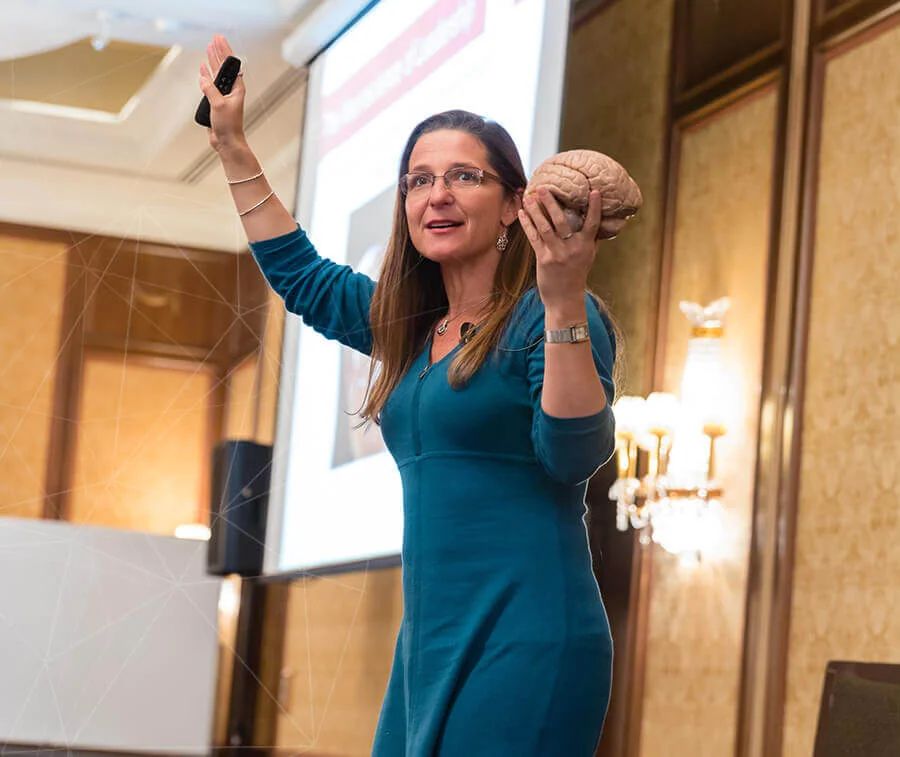
Kristen Hansen is an international speaker and leadership neuroscience expert, and the founder of EnHansen Performance.
Her work focuses on helping leaders understand how the brain influences decision-making, behaviour, resilience, adaptability, engagement and performance.
Kristen began her career in sales management before moving into leadership development. She later completed a Master’s in the neuroscience of leadership through Middlesex University in the UK and went on to develop a practical, evidence-based approach to leadership and performance.
Over the past two decades, she has worked with leaders across large organisations, government, small and medium-sized businesses, helping them apply neuroscience to the way they lead themselves, lead teams and develop others.
She is also the author of Traction: The Neuroscience of Leadership and Performance, which explores practical ways leaders can use neuroscience to improve performance, emotional intelligence, decision-making and the development of others.
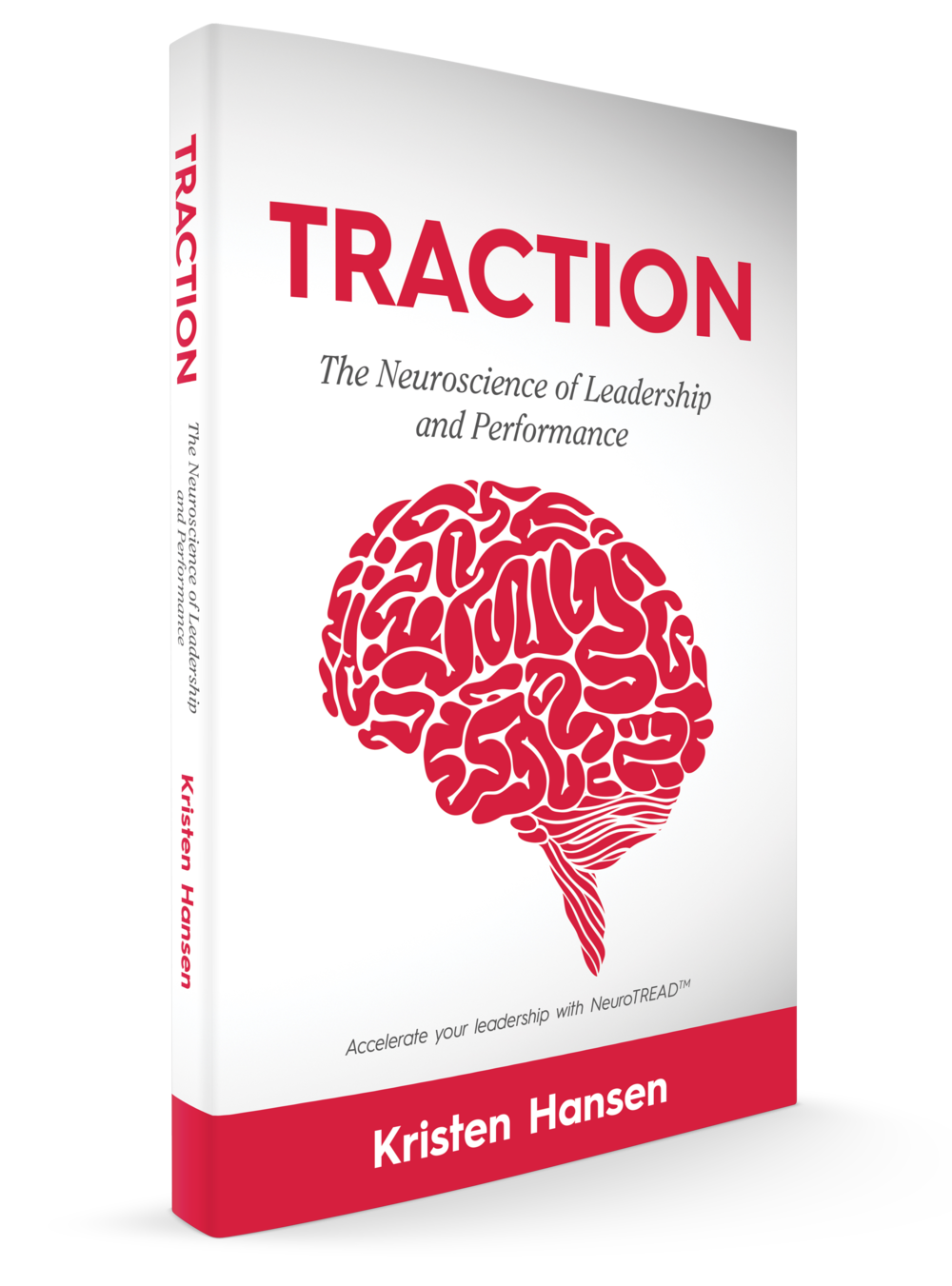
Kristen’s work goes much deeper into the practical application of neuroscience in leadership, performance and team development.
Learn more about Kristen
kristenhansen.com.au
enhansenperformance.com.au
